
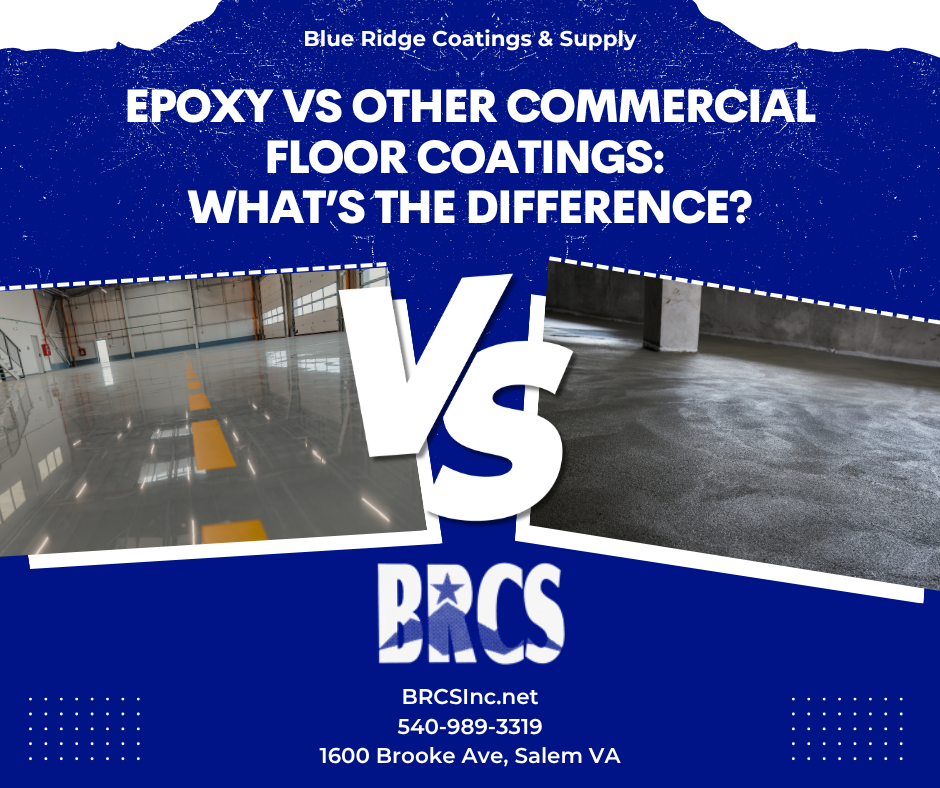
Deciding on a floor coating can be confusing. To many of us, epoxy vs other floor coatings all seem the same; however, there are key differences that make each one a unique option.
Why Wear a Coat?
Concrete seems indestructible when it’s fresh. With clean lines and an extremely hard surface, it can be tempting to forgo any coating at all. This is a mistake, as without a coating, your concrete will be susceptible to chipping, cracking, and staining.
These damages are not just aesthetic. Chipping and cracking allow more surface area for damage to spread. Left unchecked, a small crack will eventually extend the length of your concrete and even spiderweb out.
Without a floor coating, your concrete will age more quickly and may need to be replaced. If your concrete is a few years into its life and is starting to show signs of damage, it isn’t too late! You can use floor coatings to extend the life of your concrete by preventing further damage.
Epoxy
When considering epoxy vs other floor coatings, it is important to remember that epoxy has been the tried and true standard for decades. It is easy to use and is good for crafting. In recent years, epoxy tables have become very popular for their ability to bind wood together beautifully, sometimes even holding an object in stasis as an eye-catching art display.
Epoxy is great for filling holes and cracks, making it excellent for patch jobs. Epoxy has a relatively slow cure time compared to the other floor coating options, taking about 24 hours to fully cure. It is also more susceptible to UV damage when exposed for extended periods.
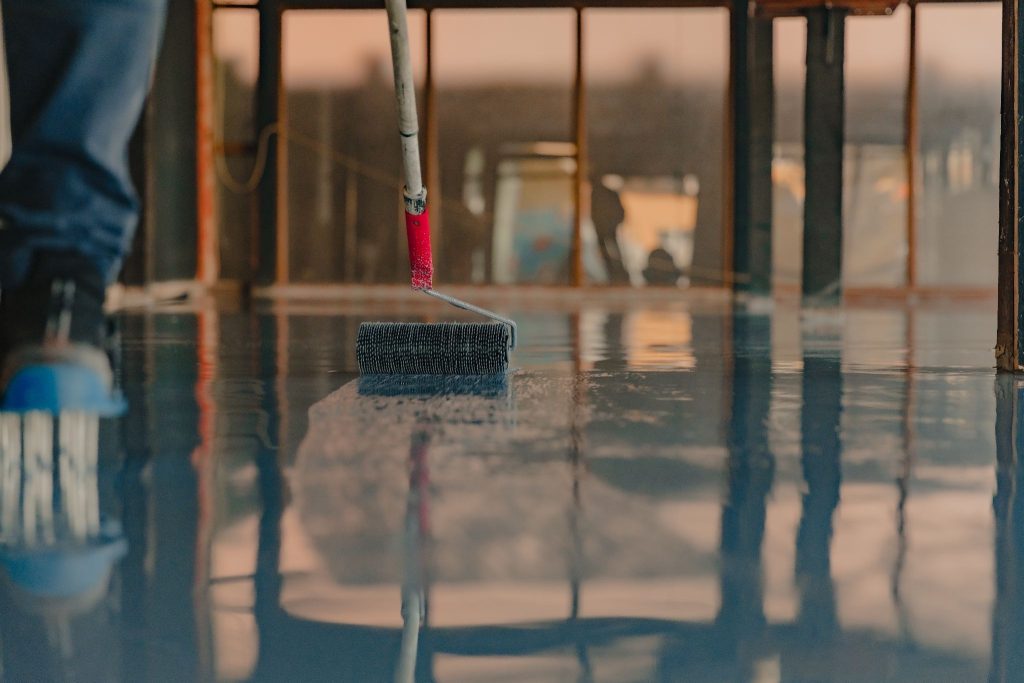
Polyurea and Polyaspartic
Polyurethane is the base compound for both polyurea and polyaspartic coatings. Like Epoxy, Polyurea coatings are susceptible to UV rays, causing them to turn yellow or fade. Polyaspartic coatings generally contain polyurea and polyaspartic compounds. They both flex better under concrete movement than epoxy does.
A benefit to polyaspartic coatings is that their cure time is about 20 minutes to an hour. They are also very strong and durable. They are less susceptible to UV rays than Epoxy and polyurea coatings. The downside is that they are often technically quite complex to mix and easy to get wrong. This makes them not DIY friendly, and requires a professional like Blue Ridge to get the job done safely.
Making the Right Choice
Consider the needs of your space before choosing a floor coating. Do you need a really fast turnaround, or can you afford to wait for epoxy to cure? Will your floor be exposed to sunlight often, or mostly kept indoors? Often, professional flooring companies like Blue Ridge use a combination of floor coatings to get the best of both worlds.
<h2> Coat It
Blue Ridge Coatings is professional and knowledgeable in our craft, and we are happy to explain the differences between epoxy and other floor coatings carefully. We will help you choose the right coating for your job. Contact us today for a quote, and let our highly trained team take it from there!